

Key Takeaways
- Music therapy uses familiar songs, rhythm, movement, and instruments to support people living with memory loss.
- Meaningful music can encourage recognition and bring back associations with past experiences.
- Music supports emotional well-being, relaxation, and social interaction.
- Singing, dancing, and playing instruments encourage communication and gentle physical movement.
- Families can incorporate familiar music into daily routines to create opportunities for connection.
- Juniper Village at Devon emphasizes personalized engagement through its Wellspring memory care approach.
How Music Therapy Helps With Memory Loss
A familiar song can bring back a favorite place, a special occasion, or the feeling of spending time with someone you love. Even when someone experiences memory changes, music often remains a source of comfort and connection. For families, sharing a favorite song can open the door to conversations, laughter, and meaningful time together.
Music therapy helps people living with memory loss by encouraging recall, supporting emotional well-being, strengthening social connections, and promoting gentle movement. Familiar melodies and rhythms give older adults different ways to express themselves and engage with the people around them. That’s why music has a place in personalized memory care, where experiences reflect each person’s interests, preferences, and abilities.
What Music Therapy Looks Like
Music therapy brings music into a structured, personalized setting to support emotional, cognitive, and physical well-being. A trained music therapist guides sessions based on each person’s needs, interests, and abilities. Sessions can include singing familiar songs, listening to favorite recordings, playing simple instruments, or moving to a steady rhythm.
Group sessions encourage participation and shared experiences, while one-on-one sessions provide a more personal approach. The focus is on how each person responds to the music rather than their musical ability. Families and caregivers can also use many of these music-based experiences at home, even without formal therapy training.
How Music Therapy Benefits Seniors With Memory Loss
Music engages several parts of the brain involved in emotion, movement, and memory. It also gives people opportunities to participate in familiar experiences, even as their cognitive abilities change. These benefits make music a valuable part of memory care and everyday well-being.
Encourages Memory Recall
Familiar songs often carry strong associations with earlier life experiences. Hearing a favorite tune can bring back thoughts of family gatherings, celebrations, or meaningful relationships. Someone might recognize a melody, sing along to familiar lyrics, or share a story connected to the music. These responses provide opportunities for families to connect through personal history and shared interests.
Supports a Calmer Mood
Music creates opportunities for relaxation and emotional comfort throughout the day. Familiar melodies can help ease agitation, while quieter selections encourage a peaceful atmosphere during restful moments. A favorite song can also lift someone’s spirits and provide a welcome change in their routine. Choosing music that reflects personal preferences helps create a comfortable, familiar experience.
Creates Opportunities for Connection
Music gives people ways to communicate beyond ordinary conversation. Singing a familiar chorus, tapping along to a rhythm, or sharing a smile during a favorite song encourages interaction without relying entirely on words. For family caregivers, these moments offer another way to spend meaningful time with someone they love.
Encourages Gentle Movement
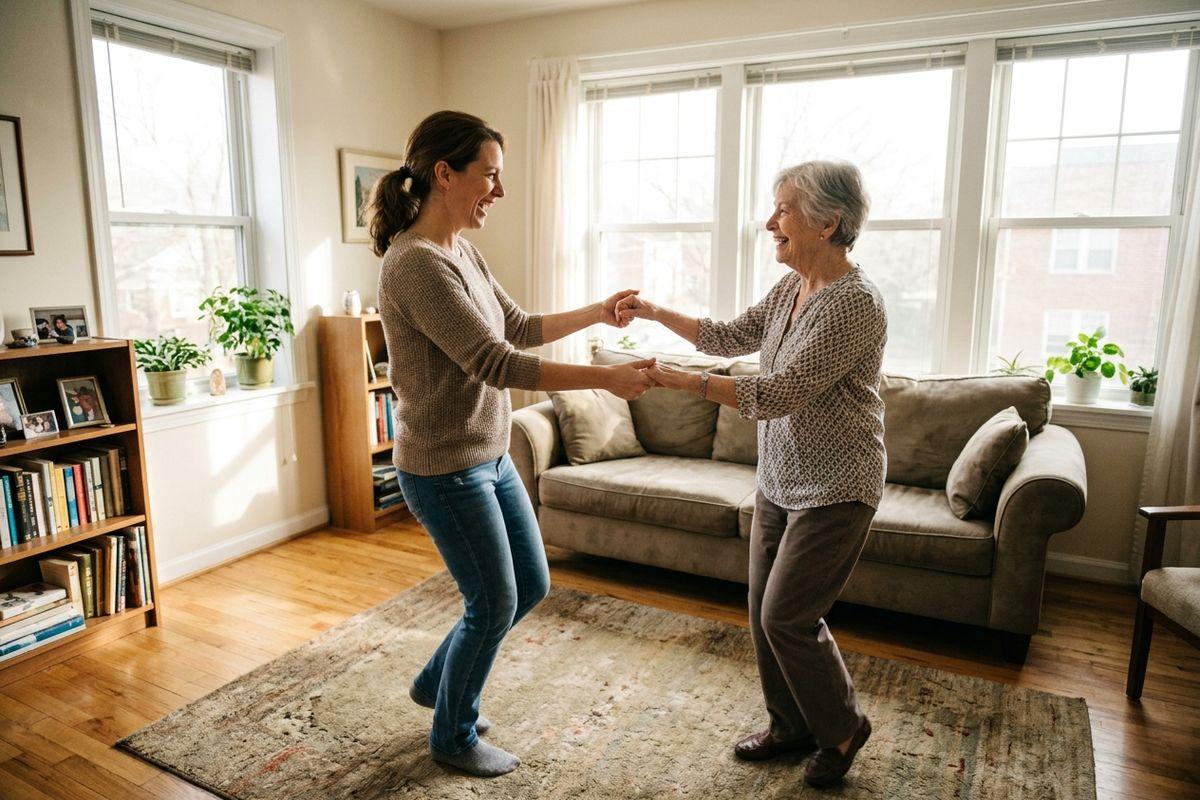
Music naturally invites people to move, whether they’re tapping their feet, clapping their hands, or swaying to a favorite song. These movements encourage physical engagement and help people practice coordination. Simple instruments, such as tambourines and rhythm sticks, also invite participants to use their hands and follow a beat.
Simple Ways to Bring Music Into Your Loved One’s Routine
You don’t need a formal music therapy session to share meaningful experiences with someone you love. Familiar songs and simple musical experiences fit naturally into everyday life. Start with your loved one’s preferences and look for opportunities to make music part of the time you spend together.
A few ways to incorporate music into their routine include:
- Choosing familiar songs connected to favorite artists, special occasions, or earlier experiences
- Creating a comfortable setting with minimal background noise and a pleasant volume
- Singing together and inviting your loved one to join in, even if they only remember a few words
- Encouraging gentle movement, such as clapping, tapping, or swaying to the rhythm
- Watching their reactions to see which songs encourage participation, bring comfort, or cause discomfort
- Playing familiar music during morning routines, afternoon visits, or other relaxed moments together
Keep the experience flexible. Some days, your loved one might want to sing or dance, while other days, listening quietly could be more appealing. Following their interests and responses helps music remain a positive part of the day.
How Music Fits Into Memory Care at Juniper Village at Devon
At Juniper Village at Devon, we believe every person deserves opportunities to connect, express themselves, and take part in experiences they find meaningful. Our Wellspring memory care approach emphasizes personalized support that reflects each community member’s interests, preferences, and unique life experiences. Music-based engagement complements this philosophy by encouraging familiar connections, creative expression, and social participation.
Every community member receives a personalized well-being assessment to help shape their experience. From shared programs to quieter moments of reflection, we focus on nurturing the mind, body, and spirit. Familiar music offers another way to celebrate individuality and encourage participation throughout daily life.
Supporting Memory and Connection at Juniper Village at Devon
Music therapy offers people living with memory loss opportunities to reconnect with familiar experiences, express their feelings, and engage with others. Whether someone is singing along to an old favorite or tapping their hands to a familiar rhythm, music encourages participation in ways that feel comfortable and personal. Families can build on these connections by sharing meaningful songs and following their loved one’s interests.
At Juniper Village at Devon, our Wellspring memory care approach celebrates each person’s individuality through personalized support and meaningful daily experiences. We encourage community members to stay connected with their interests, express themselves, and participate in life on their own terms. Schedule a tour of our incredible community today to learn more about our Wellspring memory care approach.