

Key Takeaways
- Thoughtful design, like natural light and color-coded spaces, can calm anxiety and support daily independence.
- Familiar objects and homelike surroundings help reduce disorientation.
- Consistent routines and engaging activities bring comfort and a sense of purpose.
- Personalized care means each person’s history, preferences, and story shape their experience.
- Memory support at Juniper Village at Devon is rooted in warmth, connection, and whole-person living.
Why the Space Around You Matters
When a loved one is living with memory challenges, something as simple as a confusing hallway or a loud, unfamiliar room can turn a calm morning into an overwhelming one. The physical environment plays a much bigger role than most people realize. What someone sees, hears, and feels throughout the day can either settle the nervous system or stir it up. Learning more about Wellspring Memory Care can help you understand how environment and support work together.
A thoughtfully designed memory care environment can soften confusion, spark moments of clarity, and make everyday life feel a little more manageable. From the warmth of sunlight through a window to the familiarity of a favorite chair in a comfortable corner, the space around your loved one truly shapes how they feel from hour to hour.
The Little Details That Make a Big Difference
Light, Color, and Layout
Natural light is one of the simplest tools in a well-designed memory care space. Waking up to a sun-filled room helps regulate sleep cycles and mood throughout the day, which can make a real difference in how settled and at ease your loved one feels. When nights feel restful and mornings feel grounding, the whole day tends to follow suit.
Color and layout do a lot of quiet work, too. Color-coded spaces, like a painted door frame or distinct wall tones, give visual cues that help someone navigate their surroundings without needing to ask for help. That small sense of independence, of knowing where you are and where you’re going, can ease frustration before it even starts.
Familiar Touches That Feel Like Home
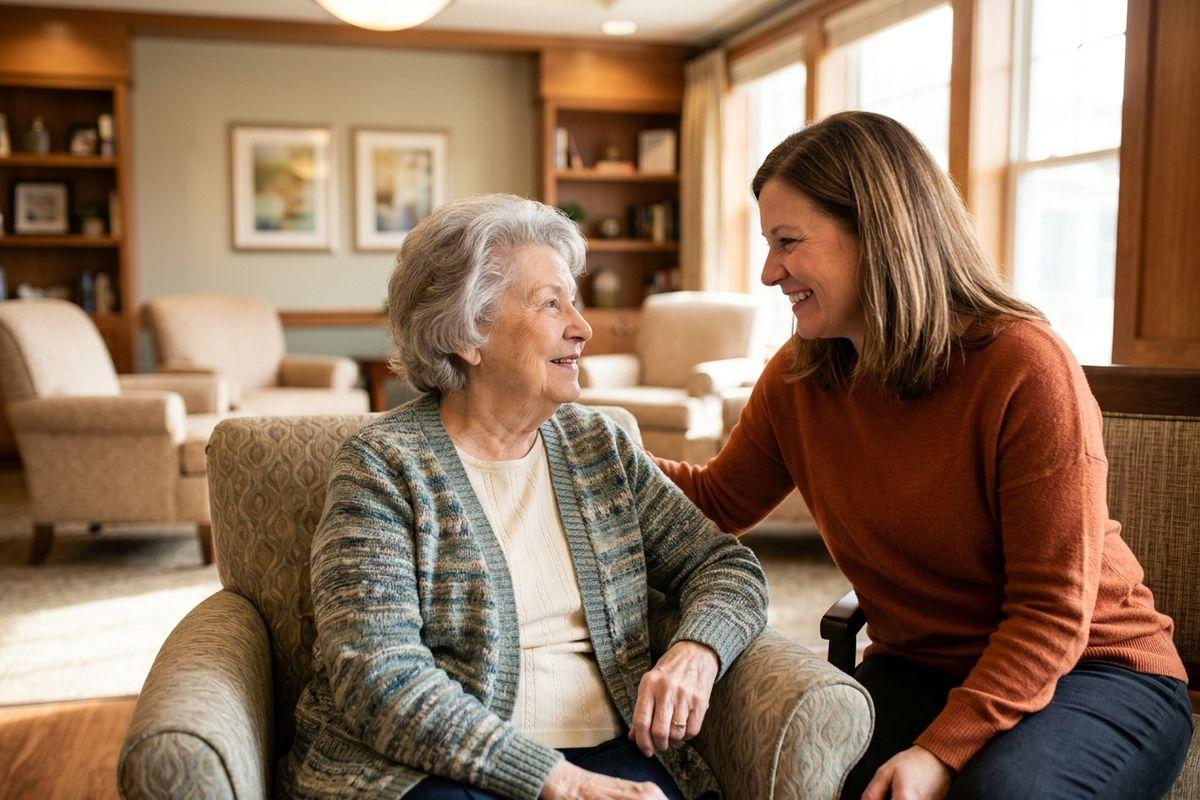
A memory care space that feels generic can feel disorienting. But when your loved one’s room reflects their own life, like a shelf of favorite books, a framed photo from a family trip or the quilt they’ve had for decades, it becomes a place that feels safe and recognizable. Those personal touches act as gentle anchors to the present.
Homelike surroundings go beyond decoration. When a space feels warm and lived-in rather than clinical, it naturally lowers stress. The soft glow of a familiar lamp and the texture of a well-loved armchair are details that communicate comfort in a language that memory often holds on to long after other things fade.

Routine, Activities, and Social Connection
Predictable Days Bring Peace of Mind
Uncertainty is exhausting for anyone, but it can feel especially heavy for someone navigating memory challenges. A consistent daily rhythm, like breakfast at the same time, familiar faces or a familiar flow of activities, takes away a lot of the guesswork. When your loved one knows what comes next, they can simply be present in the moment rather than trying to figure it out.
Predictable routines also gently reinforce memory. Repeated experiences become familiar ones. And familiar ones bring a quiet kind of comfort that shows up in everyday moments, from recognizing a caregiver’s voice to knowing where to find their favorite spot in the common room.
Stay Engaged and Connected
Joy doesn’t disappear with memory challenges. It just needs the right invitation. Art projects, gentle movement, music from a familiar era aren’t just activities to fill the day. They spark real engagement and tap into parts of the brain that thrive on creativity and rhythm. A song can bring a smile that a conversation sometimes can’t. Musical improvisation can enhance memory performance in older adults, making music a powerful part of any memory support environment.
Shared mealtimes, group outings, and casual social moments throughout the day also do something important: they remind your loved one that they belong somewhere. Connection is a fundamental human need, and memory support done well keeps that thread alive and strong. Enrichment and engagement programs are designed with exactly that in mind.
How the Team Adapts to Each Person
No two people experience memory challenges the same way. A good memory care team knows that, and it shapes everything about how care is delivered. At Juniper Village at Devon, care is built around each person’s individual history, preferences, and personality. Not a checklist. Not a category. A real, living story.
Caregivers are trained to communicate with patience, warmth, and genuine curiosity about the person in front of them. Each resident’s space is shaped to reflect who they are, not just where they are in their care journey. That personal touch makes a meaningful difference in how safe and seen someone feels each day.
Memory Support at Juniper Village at Devon
At Juniper Village at Devon, memory care isn’t a separate world. It’s woven into a warm, connected lifestyle where personal care and daily living flow together naturally. Your loved one can enjoy the comfort of familiar surroundings, the energy of engaging activities, and the steady presence of a team that truly knows them.
Senior living here is designed around the whole person, not just their care needs. If you’re exploring memory support options in Devon, Pennsylvania, reach out to the team to learn more about how Juniper Village at Devon on the Mainline can support your loved one’s next chapter.