

Key Takeaways
- Life story books bring meaningful photos, stories, keepsakes, and personal details together in one accessible place.
- Familiar memories can create natural openings for conversation and connection for people living with dementia.
- Personal history gives families and care teams a fuller picture of the person beyond their current care needs.
- Clear photos, simple pages, and short captions make a life story book easier to revisit.
- A life story book can grow over time as new stories surface and family members find more pieces worth adding.
How a Simple Book Can Hold a Whole Life
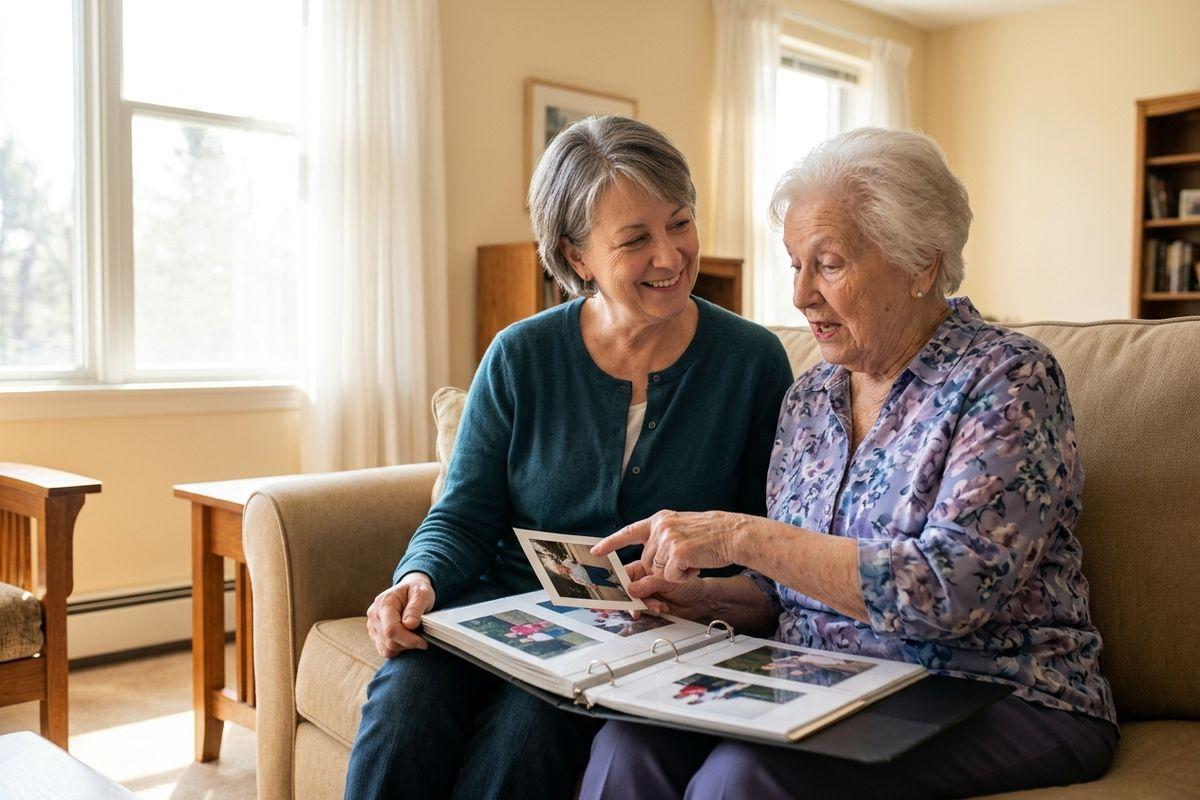
Old photographs have a way of getting people talking. A familiar face, a first car, or a kitchen that hasn’t existed in 40 years can bring a story to the surface when conversation has otherwise gone quiet. For families visiting a loved one in memory care, those moments offer another way to spend time together without putting pressure on what someone remembers today.
Life story books gather those pieces of personal history in one place. Photos, names, music, keepsakes, and short stories can preserve parts of a person’s identity while creating familiar points of connection in memory care. The finished book doesn’t need to tell every story. It just needs to hold the ones that mean something.
What Is a Life Story Book?
A life story book is a personal collection built around the experiences, relationships, interests, and memories that have shaped someone’s life. It’s like a precise reminiscence project that offers people with dementia the support they deserve. Think of it as a scrapbook with a little more intention behind it. A wedding photograph might sit beside a handwritten recipe, while another page holds a picture from a favorite vacation or the name of a song that always gets a reaction.
There’s no requirement to start with childhood and work forward year by year. Some books follow a loose timeline, while others collect memories by family, work, hobbies, travel, holidays, or other themes. The details that seem ordinary can be the ones worth keeping: Sunday dinners, a favorite chair, the dog that followed everyone around the house, or the same vacation spot visited every summer.
How Life Story Books Support People in Memory Care
Memory changes differently from person to person, so a life story book isn’t meant to test what someone can recall. Its value comes from familiarity. A recognizable photograph or story gives family members and care teams something personal to share and somewhere natural for conversation to begin.
Encouraging Reminiscence and Conversation
A photograph can take some of the work out of starting a conversation. Instead of asking someone to remember what happened earlier that day, family members can talk about the people, places, and experiences already sitting on the page. Welcome repeated stories. Each telling counts, and sometimes a familiar story simply feels good to tell again.
Reinforcing Identity and Personal History
A person living with dementia still has decades of relationships, preferences, accomplishments, routines, humor, and experiences behind them. A life story book keeps those parts of their identity visible. It can hold the teacher, gardener, parent, traveler, music lover, terrible joke teller, or devoted baseball fan alongside the person receiving memory care today.
Helping Care Teams Know the Person
Personal history gives a care team more ways to connect. Knowing someone’s favorite singer, former career, hometown, family traditions, or longtime hobbies can turn an ordinary interaction into a more personal one. At Juniper Village at Devon, that knowledge complements the memory care services and amenities within Wellspring and helps our community recognize the whole person behind each story.
How to Create a Meaningful Life Story Book
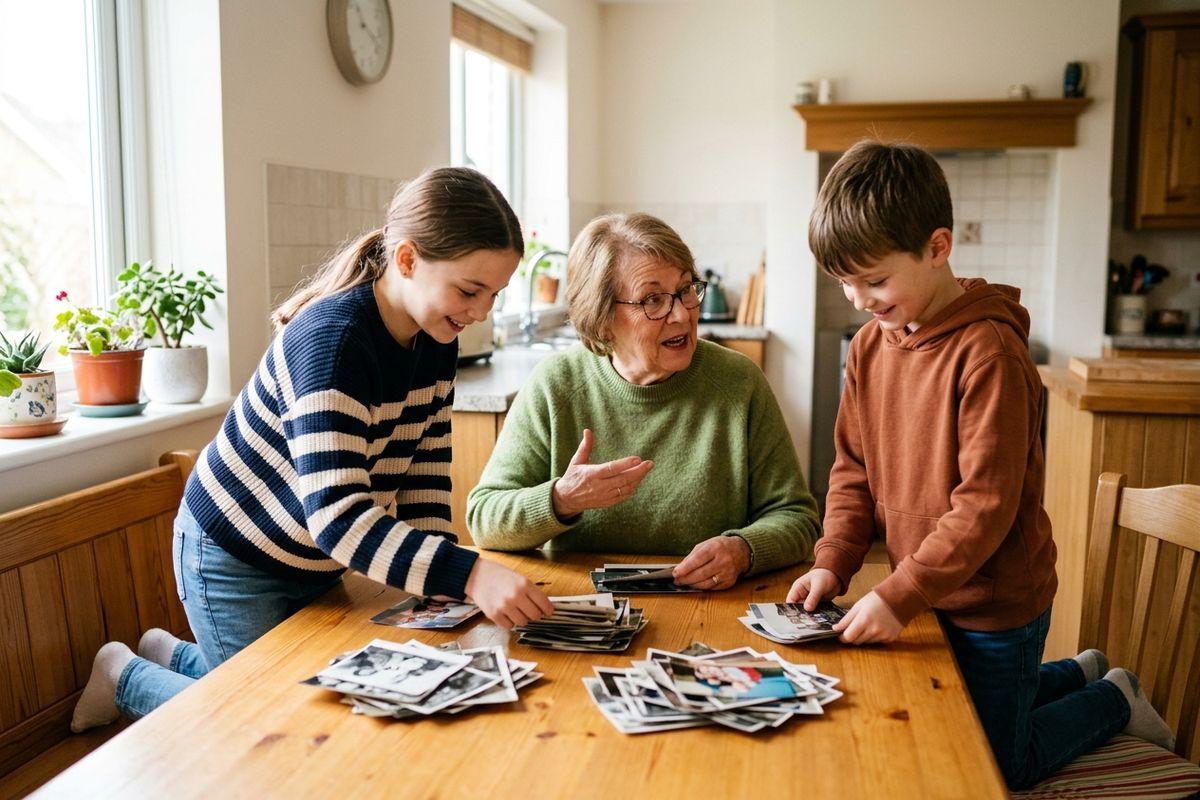
There’s no need to arrive with three boxes of photographs and finish the whole thing by Sunday night. Start with what you have and build from there. A smaller collection of meaningful memories can say far more than a book packed with every photograph the family has saved.
Start With Meaningful Memories
Choose a handful of people, places, traditions, or periods that carry real significance. When possible, involve the person the book is about and let their reactions help shape what earns a place on the page.
Choose Photos That Tell a Story
Look for photographs with something to talk about, whether it’s a beloved car, family barbecue, or old friend. Choose images where faces and surroundings are easy to recognize.
Keep Each Page Simple
Give important photographs room to stand on their own. One main image with a few names, a location, and a short caption is often enough to keep the focus clear.
Let the Book Grow Over Time
A life story book doesn’t need a final page. Add photographs and stories as they surface, whether someone finds an old album or remembers something worth keeping. The book can grow one good story at a time.
Personal Stories Have a Place in Memory Care
A life story book doesn’t have to preserve every date, name, or milestone to be meaningful. A few familiar faces, favorite songs, treasured traditions, and well-loved stories can keep important pieces of personal history close. More than anything, the book gives families another way to connect with the person they know and love.
Wellspring memory care at Juniper Village at Devon centers on knowing the person beyond a diagnosis, including the relationships, preferences, experiences, and personality that make their story their own. Life story books are one way families can bring more of that history into the present and share it with the people nearby. Schedule a visit with us today, and come discover the difference that memory care with our community can make.